Free shipping for US orders over $150
Free shipping for US orders over $150
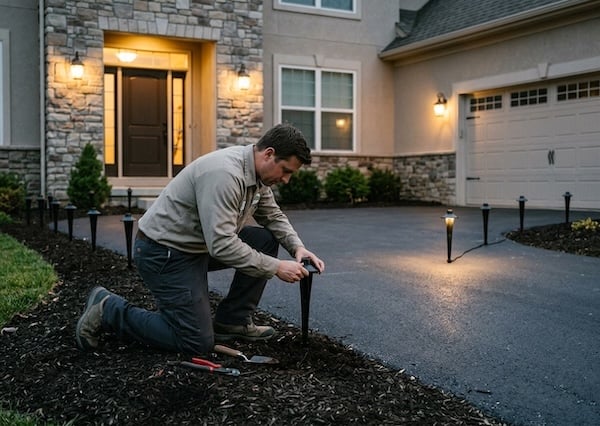
Landscape lighting is transformative in a yard, garden, or outdoor living space, but even when fixtures are installed well, they may shift seasonally under the pressure of heavy rain, wind, and snow. A common issue that homeowners and installers encounter is a loose or leaning fixture caused by unstable ground spikes. When a light no longer sits securely, it can affect the appearance of the landscape and change the direction of the light beam. Fortunately, most loose stakes are relatively simple to fix, especially when upgraded to a heavy-duty ground spike. However, understanding how they become unstable and choosing the right installation approach for the soil will also help to keep your outdoor lighting secure and properly positioned.
Several factors can cause a landscape lighting stake to lose its grip in the soil, which is why identifying the cause makes it easier to choose the best solution.
Loose, sandy, recently disturbed, or poorly compacted soil may not provide enough resistance to hold a fixture firmly. This is especially common when lights are installed in newly planted beds or areas where soil has recently been dug.
Water can soften the soil around a stake. Heavy-duty ground spike installations can still shift if the surrounding soil becomes saturated and loses its natural firmness. Frequent irrigation can have a similar effect, particularly in low-lying areas.
Landscape lights are sometimes repositioned to change the direction of illumination. Repeatedly pulling, twisting, or moving a fixture can gradually enlarge the hole around the stake and make it less secure.
Mowing, edging, planting, weeding, and other routine yard work can accidentally bump landscape fixtures. Even a small impact can loosen a stake over time.
Before making any adjustments, be sure to do a thorough inspection of the fixture and stake. Look for cracks or bends, signs of corrosion, or other damage. Also, check whether the stake itself is loose or whether the surrounding soil has simply shifted. If the spike is damaged, it may be best to replace it with a heavy-duty option rather than trying to stabilize it. However, if the stake is intact, the problem can often be corrected by improving the soil around it.
Always switch off the power to your landscape lighting system before handling or repositioning a fixture. This provides a safer working environment while you inspect the light and its connections.
Clear mulch, leaves, loose soil, and other material away from the base of the fixture. The stake needs to make solid contact with firm soil rather than resting primarily in loose surface material.
Gently return the fixture to its desired position, but avoid forcing or twisting the light aggressively, as this can put unnecessary stress on the fixture or wiring.
If more soil is needed, add it and press it firmly around the exposed stake. Work gradually around the fixture and compact the soil so there are fewer air pockets. For garden ground spikes, this simple step can significantly improve stability when the spike itself is still in good condition.
If the existing hole has become too large to hold the stake securely, remove the fixture and reset it in a more suitable location with firm soil. Avoid simply filling the hole with loose material, as it may settle again.
Restore power and check the light from the intended viewing area. Confirm that it is upright, stable, and illuminating the desired part of the landscape.
Different soil conditions require slightly different installation techniques.
Sandy soil can provide less resistance around a stake, so choose a stable installation location and compact the surrounding soil carefully. A properly sized garden light ground spike can also provide better support than a stake that is too short or poorly suited to the application.
Clay can be difficult to penetrate when dry but may become soft when wet. Loosening the soil first can make installation easier. Avoid forcing a stake into extremely hard ground, as this can damage the stake.
Mulch should not be relied on to hold a fixture upright. Position the stake firmly in the soil beneath the mulch, then replace the mulch around the fixture without burying the light's base unnecessarily.
In areas exposed to regular irrigation or drainage, choose firmer ground whenever possible. Proper placement and a stable landscape light ground stake can help reduce movement as soil conditions change.
Replace a stake if it is cracked, bent, badly corroded, or no longer fits securely into the fixture. A replacement may also be needed when the stake has been repeatedly installed and removed and no longer provides reliable support under normal wear and tear.
To help keep your landscape lighting secure, install fixtures in firm, well-compacted soil rather than directly into loose mulch, and position them away from areas where lawn equipment could accidentally hit them. After heavy rain or frequent irrigation, check your fixtures and straighten any that have shifted before the soil dries and settles. For areas that require additional stability, consider using a heavy-duty ground spike and make sure the replacement stake is properly sized and compatible with your landscape lighting fixture.
Q: Why do my landscape light ground spikes keep coming loose?
A: Loose soil, saturated ground, repeated fixture adjustments, and accidental impacts from garden equipment can all cause movement.
Q: Can I reuse a loose ground spike?
A: Yes, if the spike is straight, intact, and free from significant damage. The surrounding soil may simply need to be compacted or the fixture repositioned.
Q: How do I keep garden ground spikes upright after heavy rain?
A: Inspect them after the ground has settled, straighten any leaning fixtures, and compact firm soil around the stake. Avoid relying on loose mulch for support.
Q: Should I put a ground spike directly into mulch?
A: No. The spike should be installed securely into firm soil underneath the mulch. Mulch can then be placed around the fixture for a finished appearance.
Q: When should I replace a loose landscape-light stake?
A: Replace it when the stake is damaged, severely corroded, bent, or unable to remain secure even after being installed in firm soil.

Opening Hours
Monday – Friday 7:30am - 3:30pm PST

Need Help?
Fast answers to common questions.

Stay in the Loop
Be the first to know about new arrivals, sales & tips — it's free!