Free shipping for US orders over $150
Free shipping for US orders over $150
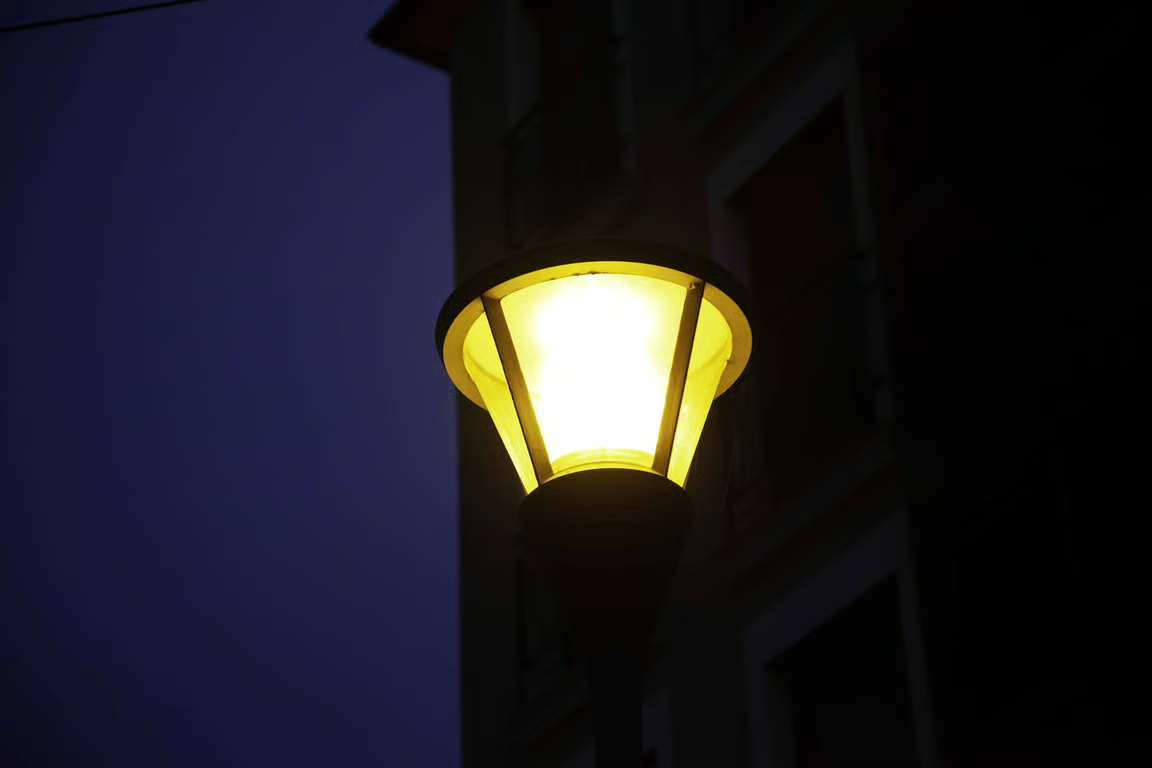
Outdoor lighting should make your property easier to navigate without requiring you to remember another daily task. Dusk to dawn lights provide an automatic solution by turning on as natural light fades and switching off after daylight returns.
This type of lighting can illuminate entrances, driveways, pathways, steps, patios, garden beds, and other frequently used outdoor spaces. It can improve visibility around the property while helping homeowners avoid leaving outdoor lights on throughout the day.
There are several ways to create an automatic lighting system. You can use a dusk to dawn light bulb, install a fixture with a built-in sensor, or operate low-voltage landscape lights through a transformer equipped with a photocell and timer controls.
A dusk to dawn light is an outdoor light controlled by surrounding light levels rather than a standard manual switch alone. A small light-sensitive device, commonly called a photocell or photo sensor, detects whether the area is light or dark.
When the sensor detects fading daylight, the system activates the light. When daylight returns, it switches the light off. This automatic cycle repeats each day without requiring the homeowner to adjust the schedule as sunset times change.
Some people use the phrase “dawn to dusk outside lights,” but the intended function is normally dusk to dawn. The lights operate from evening until morning, not during daylight hours.
A dusk to dawn light bulb is a bulb with a light sensor built directly into it. It can be installed in certain compatible outdoor fixtures in much the same way as a standard bulb.
Once installed, the wall switch typically needs to remain on. The bulb’s sensor then controls when the light turns on and off.
This option may work well when you already have a suitable porch, garage, or entry fixture and only want to add automatic operation. However, the sensor must be exposed to natural ambient light. A heavily enclosed or deeply shaded fixture may prevent the bulb from accurately reading outdoor conditions.
Before installing one, check:
A dusk to dawn light bulb should not be confused with the bulbs used in every low-voltage landscape fixture. In a larger landscape lighting system, automatic control is often managed centrally through the transformer instead.
Homeowners frequently ask, “How do dusk to dawn lights work?” The answer depends on where the sensor is located, but the basic process is similar for most systems.
The photocell continuously measures the surrounding light. As evening approaches and the light level drops below a set threshold, the photocell completes the control circuit, turning the light on. After sunrise, the increased light level triggers the system to switch off the light.
Automatic outdoor lighting generally uses one of three configurations.
Sensor-Equipped Bulbs
The photo sensor is built into the bulb. This is often the simplest option for an existing compatible fixture.
Fixtures With Built-In Photocells
The sensor is integrated into the outdoor fixture. The entire fixture is designed to respond to changes in daylight.
Low-Voltage Transformers With Photocells
A low-voltage landscape lighting system can use a central transformer with photocell and timer settings. The transformer converts standard household power to the lower voltage required by the connected landscape lights and controls when the system is operating.
Best Pro Lighting offers low-voltage lighting transformers for outdoor lighting projects, including options with automatic controls. This approach is useful when several lights need to follow the same dusk-to-dawn schedule.
A sensor-equipped bulb is usually intended to control one light. A low-voltage transformer can control multiple landscape fixtures throughout the property.
For example, a single bulb may be appropriate for a front porch fixture. A transformer-controlled system is more practical when you want to illuminate a walkway, driveway edge, garden, patio, and architectural features simultaneously.
A low-voltage system also gives you greater flexibility in selecting different fixture types. You can combine LED path lights, directional fixtures, floodlights, step lights, and other landscape lighting products and operate them from a single properly sized transformer.
The right option depends on the project's size and purpose.
More Reliable Nighttime Visibility
Dusk to dawn outdoor lights activate even when you are away from home or forget to use a switch. Consistent illumination makes it easier to see entrances, paths, changes in elevation, and other features after dark.
Easier Navigation Around the Property
Dark steps, walkway edges, and uneven surfaces can be difficult to see. Strategically positioned lighting can help family members and guests move around these areas more comfortably.
Consider using outdoor step and deck lights near stairs, deck edges, seating areas, and transitions between surfaces.
Automatic Seasonal Adjustment
A photocell responds to actual daylight rather than relying solely on a fixed clock. The system can therefore account for the earlier sunsets of winter and the longer evenings of summer without frequent timer changes.
Better Use of Electricity
A properly functioning dusk light switches off when daylight returns. Pairing automatic controls with LED fixtures can prevent the system from operating unnecessarily during the day.
Improved Outdoor Appearance
Automatic lighting does more than brighten practical areas. It can reveal architectural details, trees, garden beds, walls, and outdoor gathering areas after sunset.
Homeowners planning a complete system can browse LED garden lighting or review the Best Pro Lighting outdoor lighting gallery for placement ideas.
Automatic lighting works best when fixtures are selected for a specific purpose rather than installed randomly throughout the yard.
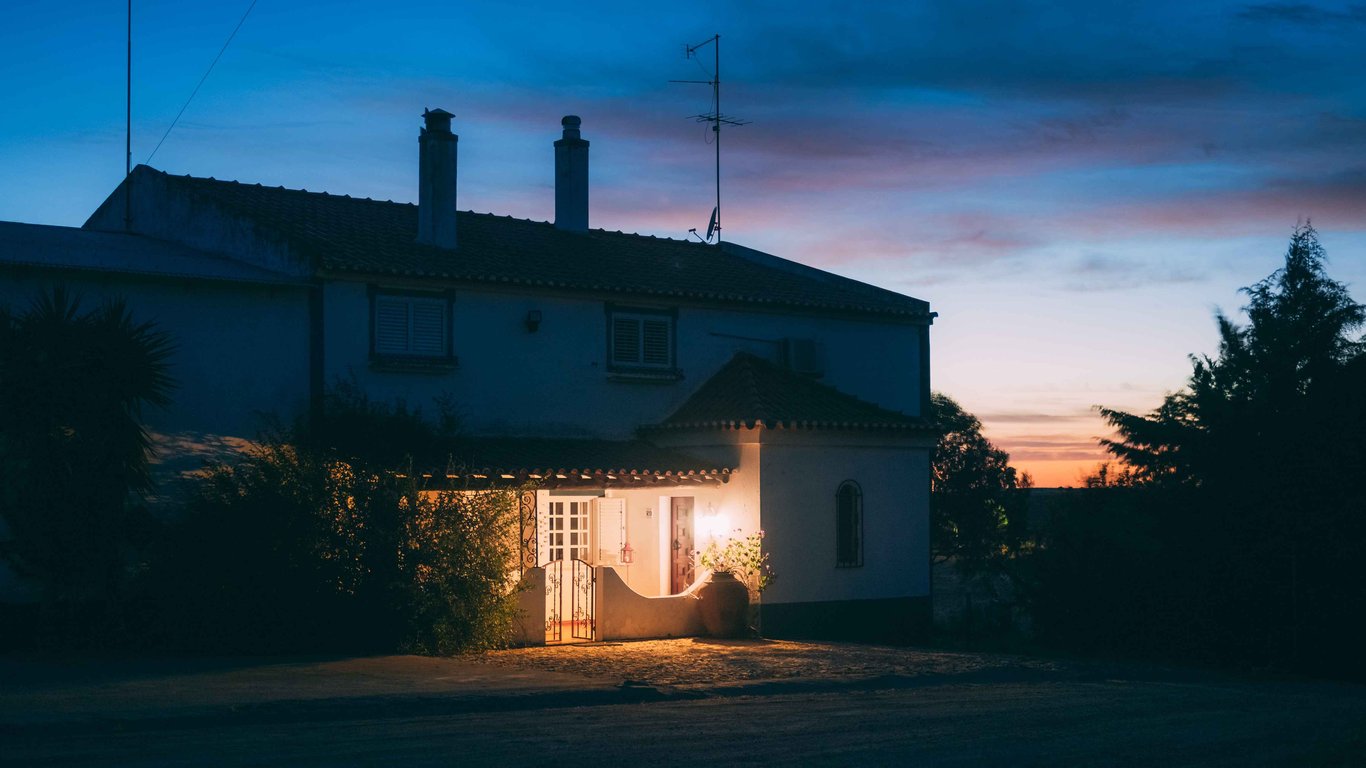
Front Doors and Side Entrances
Place lights where they illuminate locks, doorways, house numbers, and nearby walking surfaces. Make sure the fixture does not create harsh glare at eye level.
Driveways and Garage Areas
Garage doors, side yards, parking areas, and driveway entrances may need broader illumination. LED floodlights can cover wider areas when aimed carefully.
Walkways and Garden Paths
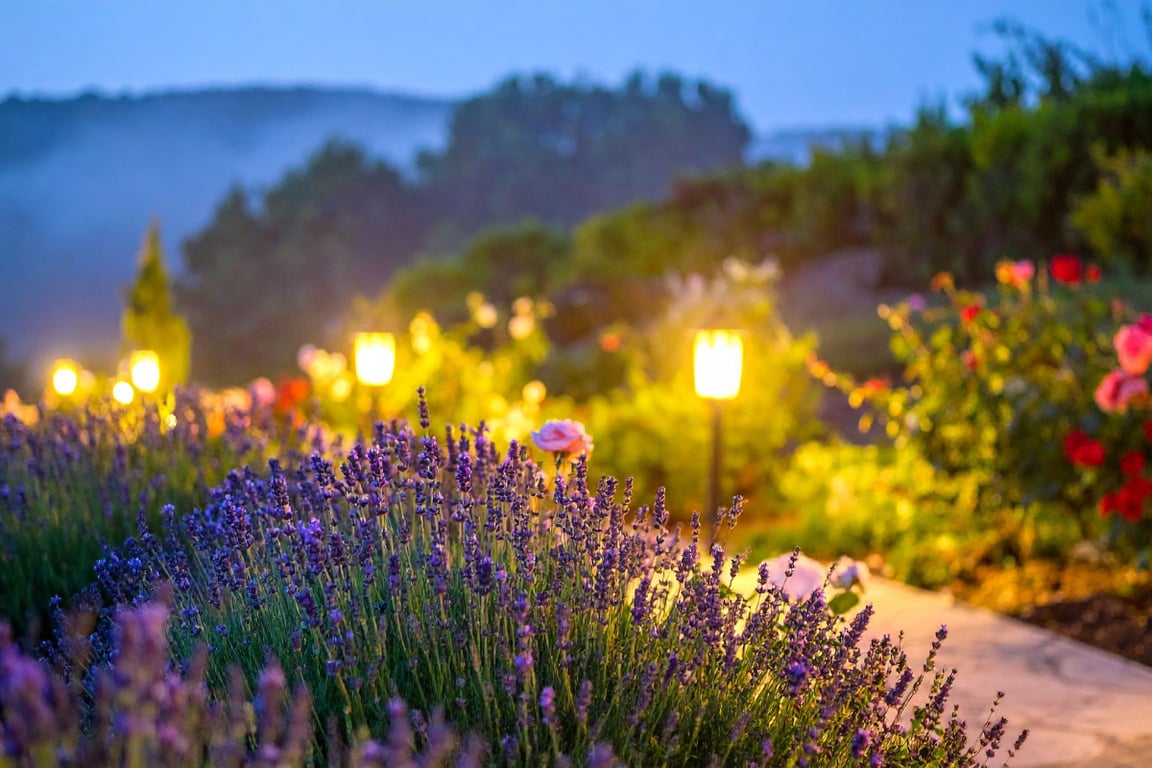
Path lights should define the route without making the landscape look like a runway. Space fixtures according to their light spread, nearby plants, and changes in direction.
Steps and Decks
Use compact fixtures to illuminate stair treads, risers, railings, deck edges, and level changes. The goal is to make the structure visible without directing light into people’s eyes.
Patios and Outdoor Living Areas
Automatic lighting can prepare outdoor seating areas for evening use before anyone steps outside. Use softer, controlled illumination around dining and conversation areas.
Landscape and Architectural Features
Directional lights can highlight trees, stonework, columns, and textured walls. These applications add depth to the property while also improving general visibility.
Before purchasing a bulb, fixture, or landscape lighting system, consider the following factors.
Determine How Much of the Property Needs Light
One porch fixture may only need a sensor-equipped bulb. A larger property may benefit from a connected low-voltage system.
Select the Correct Brightness
Brighter is not always better. Excessive output can cause glare, disturb nearby rooms, and wash out the landscape. Use focused fixtures and appropriate output for each location.
Choose an Appropriate Color Temperature
Warm white light is commonly used in homes and gardens because it creates a comfortable atmosphere. Cooler light may appear sharper, but can feel harsh when overused.
Check Outdoor Ratings
Bulbs, fixtures, transformers, connectors, and cables should be suitable for their intended outdoor locations. Products exposed directly to rain or irrigation require the appropriate protection.
Check Sensor Placement
The photocell needs access to natural daylight. Do not place it where the fixture’s own beam, a streetlight, or another nearby light shines directly onto the sensor.
Plan the Complete Electrical Load
For a low-voltage system, calculate the combined wattage of all connected fixtures and select a transformer with sufficient capacity. Leave room for system performance and possible future expansion.
A complete landscape lighting kit may simplify smaller projects by grouping compatible system components.
A dusk to dawn light that stays on during daylight may not be receiving enough natural light. The sensor may be blocked by dirt, leaves, a fixture cover, or a nearby structure.
Try these basic checks:
For transformer-controlled systems, inspect the photocell connection and review the timer or automatic-mode settings. Turn off the power before handling electrical components and consult a qualified professional when the cause is unclear.
Repeated cycling can occur when the light from the fixture reaches its own photocell. The sensor interprets the light as daylight and switches the fixture off. Once the area becomes dark again, the light turns back on.
Repositioning the sensor or redirecting the fixture may resolve the problem. Reflective walls, windows, snow, and nearby outdoor fixtures can also affect sensor readings.
A single dusk to dawn light bulb may be enough for a porch or garage. For pathways, garden areas, steps, driveways, and architectural lighting, a low-voltage system offers greater flexibility.
Best Pro Lighting carries outdoor transformers, fixtures, outdoor LED bulbs, accessories, and lighting kits for residential and commercial landscape projects. By connecting compatible fixtures to a transformer with photocell or timer controls, you can create an outdoor lighting system that turns on automatically when evening arrives.
Plan each fixture around a clear purpose, select the correct transformer capacity, and keep sensors away from competing light sources. A well-designed dusk-to-dawn system can provide consistent illumination while making outdoor lighting easier to manage year-round.
Q: Do dusk to dawn lights stay on all night?
A: Yes. Under normal conditions, they switch on when the sensor detects darkness and remain on until sufficient daylight returns.
Q: Can I put a dusk to dawn light bulb in any fixture?
A: Not necessarily. The socket, fixture wattage, outdoor rating, enclosure type, and sensor exposure must all be compatible with the bulb.
Q: Do dusk to dawn lights need a wall switch?
A: Many fixtures and bulbs are connected to a wall switch, but the switch must usually remain on for automatic operation. The photocell then controls the daily cycle.
Q: Can low-voltage landscape lights operate from dusk to dawn?
A: Yes. Multiple low-voltage lights can be controlled through a compatible transformer with a photocell, timer, or automatic operating mode.
Q: Are dusk to dawn outdoor lights the same as motion lights?
A: No. Dusk-to-dawn lights respond to surrounding light levels and normally stay on throughout the night. Motion lights activate when their sensor detects movement. Some fixtures combine both functions.
Q: Will a photocell work in a shaded location?
A: It may work, but deep shade can cause the light to activate too early or remain on during the day. The sensor should be positioned where it can detect normal changes in natural daylight.
Q: Why does my dusk to dawn light turn on before sunset?
A: Cloud cover, shadows, nearby buildings, trees, or a poorly positioned sensor may make the area appear darker than it is. Check the sensor location and remove any obstructions to ambient light.
Q: Can I use a timer and a photocell together?
A: Yes, depending on the transformer or control system. A photocell can activate the system at dusk, while a timer can turn it off at a selected time rather than keep it running until sunrise.

Opening Hours
Monday – Friday 7:30am - 3:30pm PST

Need Help?
Fast answers to common questions.

Stay in the Loop
Be the first to know about new arrivals, sales & tips — it's free!