Free shipping for US orders over $150
Free shipping for US orders over $150
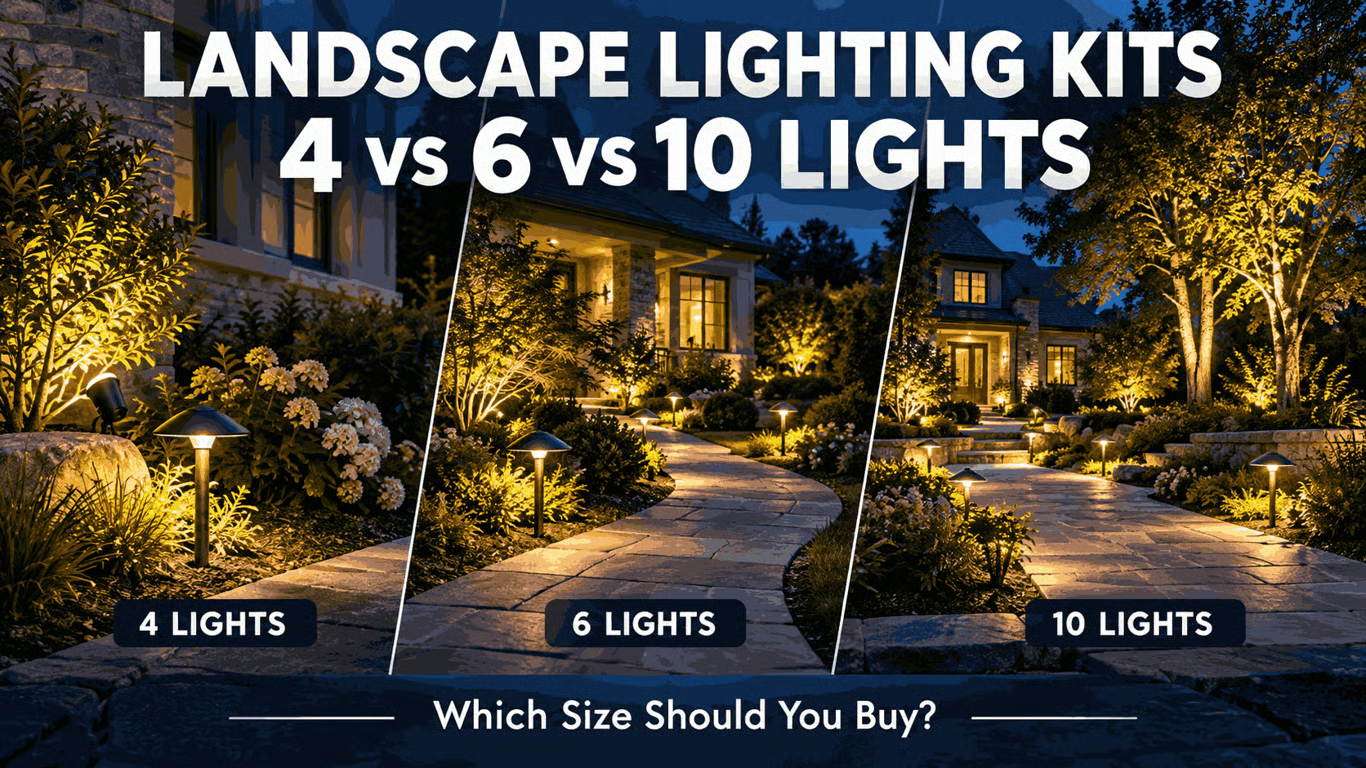
Choosing between four, six, and ten landscape lights starts with a simple question: what do you want to illuminate?
A small garden feature may only need a few carefully placed lights. A winding walkway needs fixtures that direct light onto the walking surface. A front yard with a path, trees, and planting beds may benefit from a kit that combines several fixture types.
The best landscape lighting kits match the number and style of lights to your outdoor layout. Buying more fixtures does not automatically create a better result, especially if those fixtures do not suit the areas you want to light.
In this guide, we compare four-light, six-light, and ten-light options, explain what to check before buying, and help you choose a practical starting point for your property.
Use this table as a starting point. These are planning suggestions, and the right choice depends on fixture output, beam spread, placement, and your landscape.
| Kit size | A good starting point for | What to check |
|---|---|---|
| 4 lights | A focused garden feature, compact planting area, or pond project | Whether the fixtures are flood lights, pond lights, or another style |
| 6 lights | A walkway, garden border, or several landscape accents | Whether the set contains path lights or directional lights, and whether a transformer is included |
| 10 lights | A project that combines path lighting with trees, shrubs, or architectural accents | Whether the mix of fixture types matches your layout |
Best Pro Lighting’s selection illustrates why fixture type matters. Its four-light category includes flood and pond options, while its ten-light kits include combinations of six directional bullet lights and four mushroom or pagoda path lights.
You can compare the available configurations in the landscape lighting kits collection.
A four-light kit is worth considering when your project has a clear, limited focus.
Perhaps you want to highlight a planting bed beside the patio, illuminate a few garden features, or add lighting to a pond. Starting with four fixtures lets you work on one area without committing to a larger layout.
A four-light kit can make sense when:
However, four fixtures will not necessarily cover every part of a small yard. A compact space with a walkway, steps, trees, and seating may need several different lighting solutions.
Best Pro Lighting’s four-light kits include a set of four black 3W LED flood lights listed with wire nuts, #16 wire, and a 60W transformer. The category also includes a four-pack of 6W LED pond lights with a 60W transformer. These options serve different purposes, even though both contain four lights.
For a walkway project, choose fixtures designed to cast light onto the path. For a water feature, check that the specific lights are rated for the intended placement.
Move beyond a four-light kit if your plan leaves important areas unaddressed.
For example, using all four fixtures on trees means none remain for the walkway. If you need both ground-level illumination and landscape accents, a kit with a different fixture mix may be a better fit.
Six-light landscape lighting kits offer more placement options while keeping the project manageable.
They are a useful starting point for homeowners who want to light a defined walkway, outline a garden border, or highlight several features in one part of the yard.
A six-light kit may suit:
The key is choosing the right kind of six-light set.
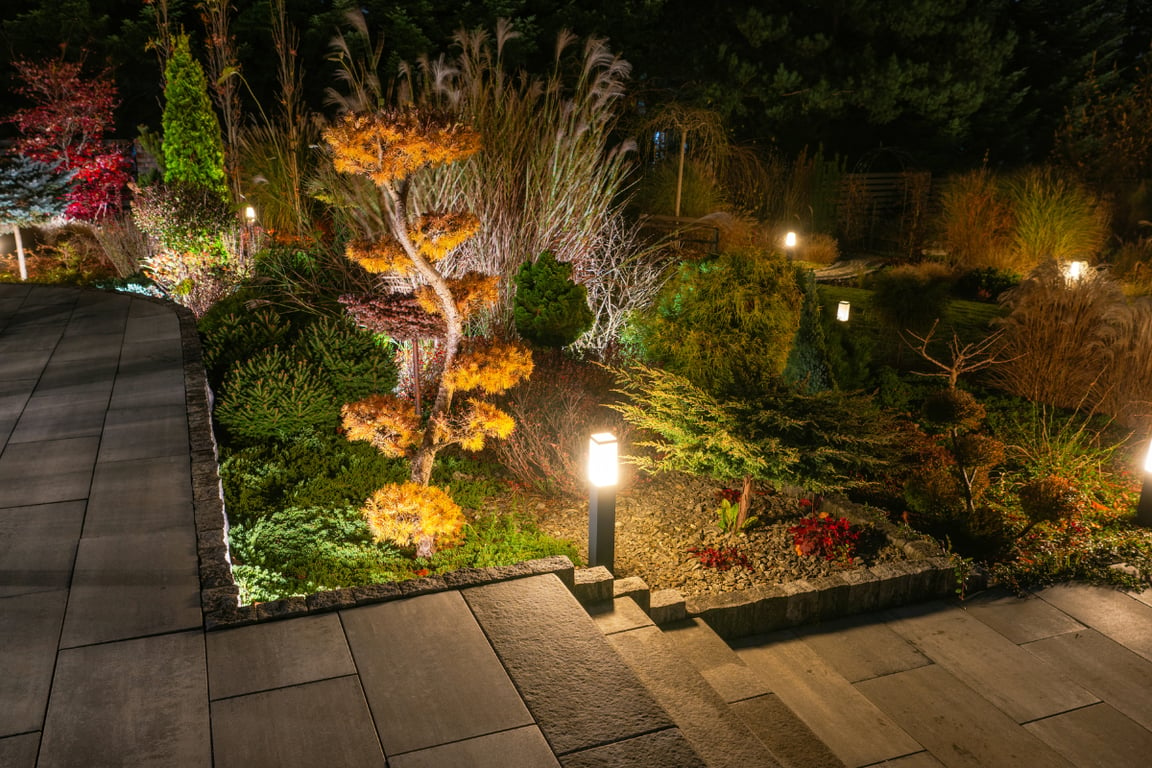
Six path lights can support a walkway design. Six directional lights give you several adjustable accents. Those two arrangements will produce very different results.
For routes between the driveway, front door, and garden, look for fixtures that direct light toward the ground.
Best Pro Lighting offers a six-light LED pagoda kit with a 150W transformer. Its six-light selection also includes other path-light styles and directional-light sets. Check each listing for the exact package contents.
If you are still choosing a fixture style, browse the path and area lighting collection to compare designs.
Six lights may be insufficient when you want to illuminate a walkway and several separate focal points.
They can also be more than you need for a single compact feature. Avoid placing extra fixtures simply because they came in the package. Each light should have a purpose in the design.
A ten-light kit is worth considering when your plan includes both practical path lighting and decorative accents.
Having more fixtures gives you more placement choices, but the strongest reason to choose this size is often the combination of fixture types.
A mixed ten-light kit can suit projects such as:
Best Pro Lighting’s ten-light kits include combinations of six directional bullet lights with four mushroom or pagoda path lights.
That combination lets you assign different jobs to different fixtures.
For example, you might use the four path lights at selected points along an entrance route and the directional lights on nearby trees, shrubs, or textured surfaces.
This is a possible layout, rather than a guaranteed coverage plan. A broad tree may need more than one light, and four path lights may not provide suitable illumination along an entire walkway.
The six directional bullet and four mushroom path light kit is one option to explore when your project needs both fixture styles.
A larger kit can be unnecessary if your project involves only one small bed or a few accents.
Closely spaced lights can also create glare and make the yard feel overly bright. Leave room for shadows so illuminated features stand out.
Before comparing prices, make a simple lighting plan.
1. List the Areas You Want to Illuminate
Walk around your property after dark and identify your priorities.
Consider the entrance route, path bends, planting beds, trees, and outdoor seating areas. Note where existing porch or patio lights already provide useful illumination.
Choose the most important areas first. You may find that a smaller, focused project meets your needs.
2. Match Each Area to a Fixture Type
Different fixtures solve different problems.
Path lights direct light onto nearby ground surfaces. Directional lights let you aim illumination at selected features. Flood lights provide a broader spread, depending on their design.
Write down the fixture type beside each location on your plan. This helps you compare landscape lighting kits by what they can do, instead of counting lights alone.
3. Count Planned Fixture Positions
Once you know which fixtures you need, estimate how many positions your layout requires.
Do not assume one light will illuminate every tree or that a fixed number of fixtures will cover a certain yard size. Plant height, canopy width, fixture output, and viewing angles all influence the result.
Use the count as an initial estimate, then refine placement when you test the lights after dark.
4. Measure the Cable Route
Measure from the planned transformer location along the route the cable will actually follow.
Include turns around beds and the distance between fixture groups. A kit may contain enough lights but still need additional cable for your layout.
Cable gauge, circuit load, and run length also affect system design. Confirm that the included cable suits your installation before buying.
A landscape lighting kit with transformer can simplify shopping by bundling several system components. However, package contents vary.
Before ordering, check:
A fixture set should not be assumed to include a transformer simply because it appears in a kits category.
Transformer selection depends on the connected load and system requirements.
For example, six lights rated at 3W each have a combined rated load of 18W. Ten lights rated at 3W each total 30W. These are arithmetic examples, not specifications for every kit.
Use the actual wattage of your chosen lights, then follow the transformer manufacturer’s loading and compatibility instructions. Account for planned additions, cable runs, and any other connected fixtures.
Browse Best Pro Lighting’s low voltage transformers if you are building a system separately or reviewing expansion options.
Choosing by Fixture Count Alone
Ten lights of the wrong style may be less useful than six fixtures suited to your project. Start with the lighting tasks.
Assuming Every Kit Covers a Standard Yard Size
There is no single square-foot coverage rule for four, six, or ten fixtures. Landscape shape, fixture placement, beam spread, and existing light all matter.
Ignoring Cable Requirements
The distance from the transformer to the first fixture counts too. Measure the full route before deciding that the supplied cable is enough.
Comparing Incomplete and Complete Packages
When comparing low voltage landscape lighting kits, look at the total equipment needed. A lower-priced fixture set may require a separate transformer, cable, and connectors.
Skipping the Nighttime Test
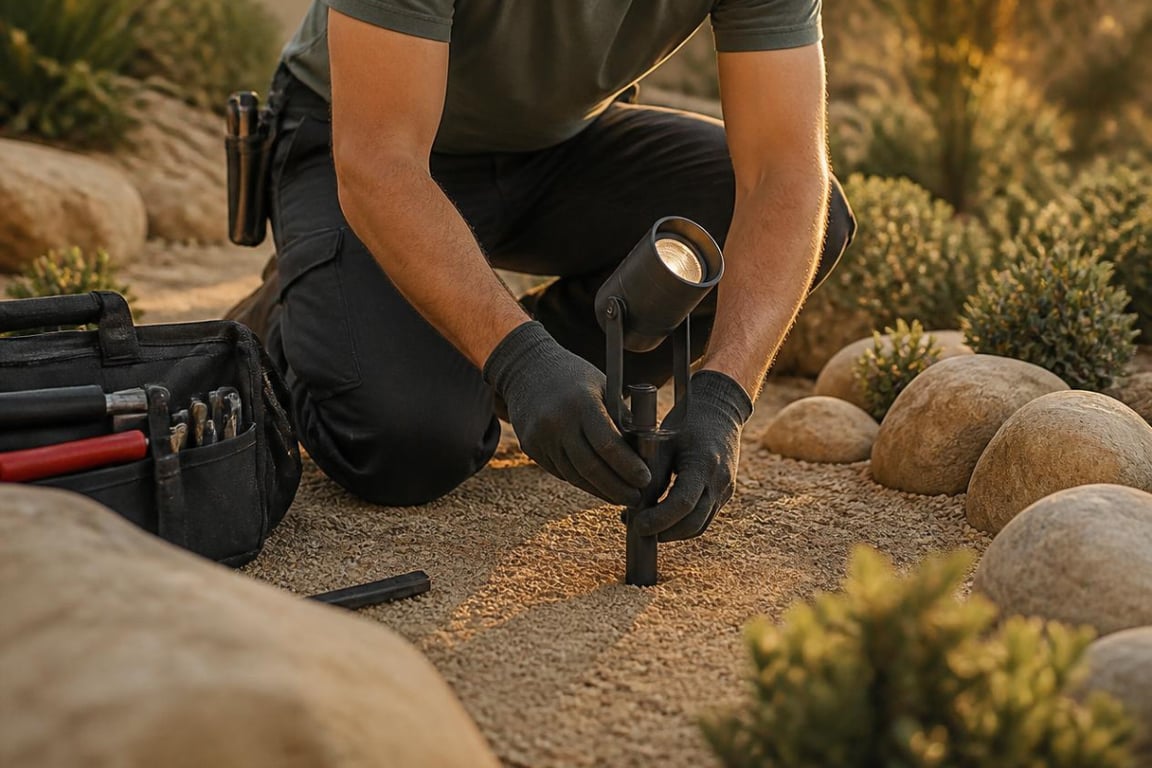
Temporarily position the fixtures and test the layout before completing installation. Check the view from the walkway, street, patio, and inside your home, then adjust lights that shine toward eyes or windows.
Q: Is a 4-light kit enough for a small yard?
A: It can be enough for a focused project, such as highlighting a few features. A small yard with several lighting needs may require more fixtures or a combination of styles.
Q: Should I buy a 6-light or 10-light kit?
A: Consider six lights when your project mainly needs one fixture type, such as path lighting. Consider a mixed ten-light kit when you want to combine path illumination with directional accents. Let your planned fixture positions guide the decision.
Q: Do all landscape lighting kits include a transformer?
A: No. Check the individual product listing for the transformer, cable, connectors, bulbs, and mounting components included.
Q: Can I add lights to a kit later?
A: Expansion may be possible if the transformer has suitable capacity and the additional fixtures are compatible. Cable size, run length, and the revised total load also need to be checked.
Q: How far apart should landscape lights be placed?
A: Spacing depends on the fixture’s light distribution, mounting height, output, and intended effect. Follow the product guidance and adjust placement after dark to address unwanted gaps or glare.
Choose four lights for a focused project, six for a defined path or group of accents, and ten when a mixed layout needs both path and directional lighting.
Before buying, confirm that the fixture styles, transformer, cable, and included accessories match your plan.
Explore Best Pro Lighting’s landscape lighting kits to find a configuration that fits the features you want to illuminate and the way you use your outdoor space.

Opening Hours
Monday – Friday 7:30am - 3:30pm PST

Need Help?
Fast answers to common questions.

Stay in the Loop
Be the first to know about new arrivals, sales & tips — it's free!